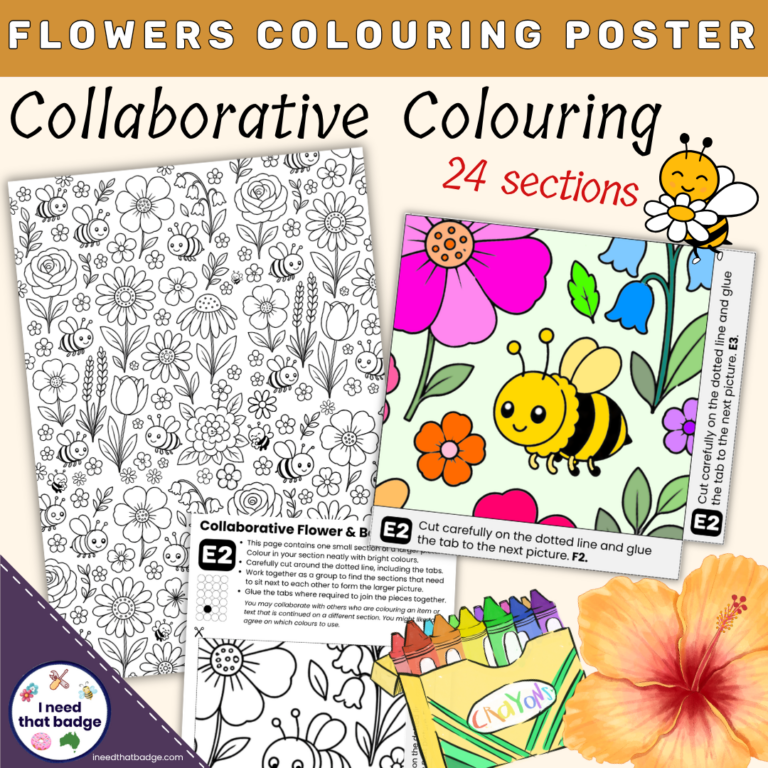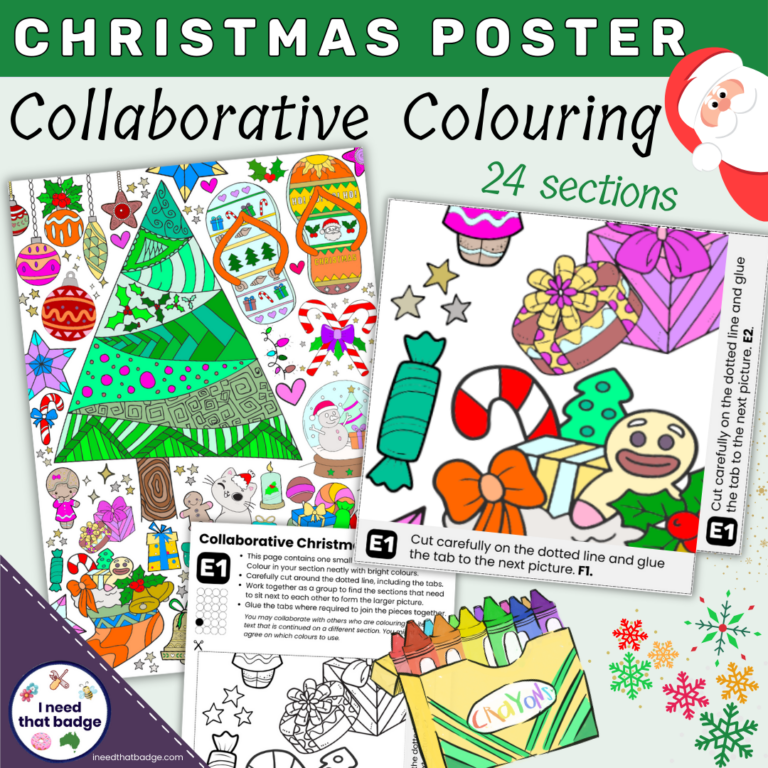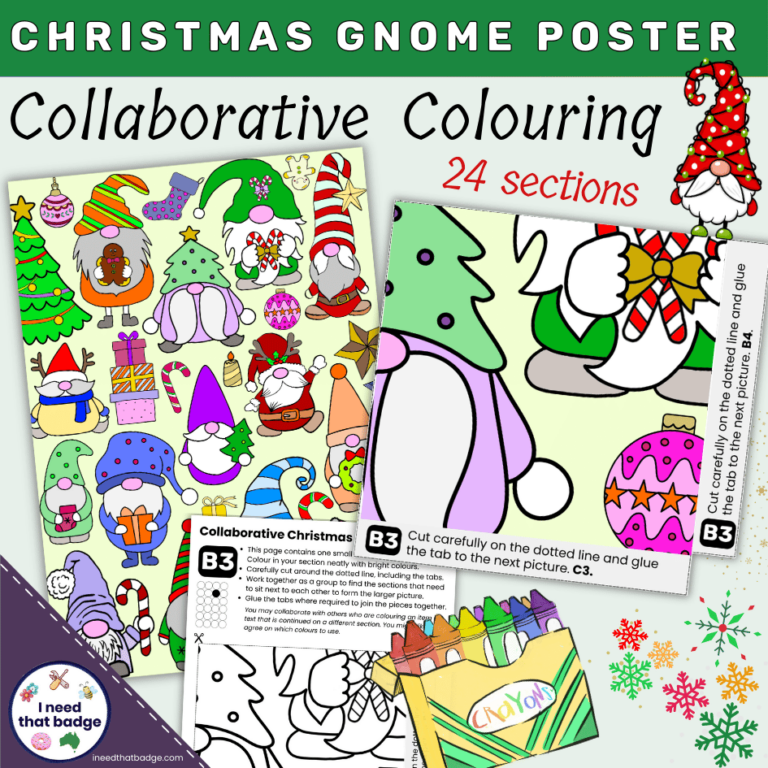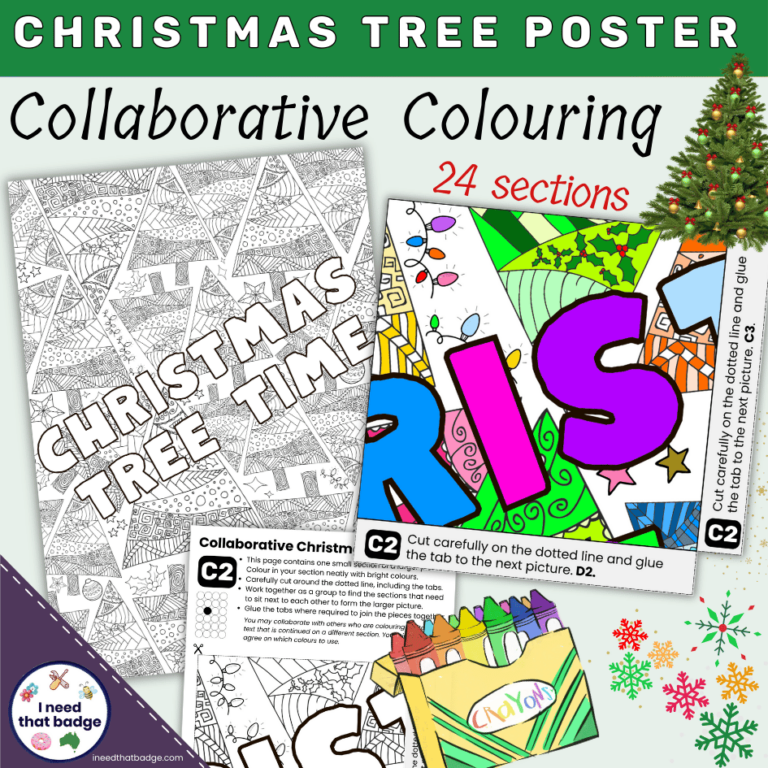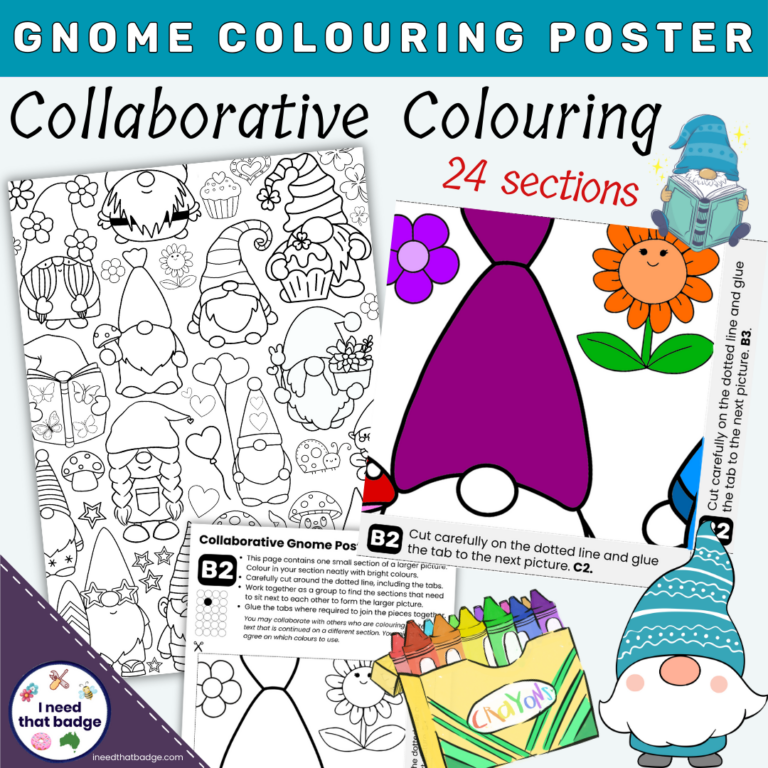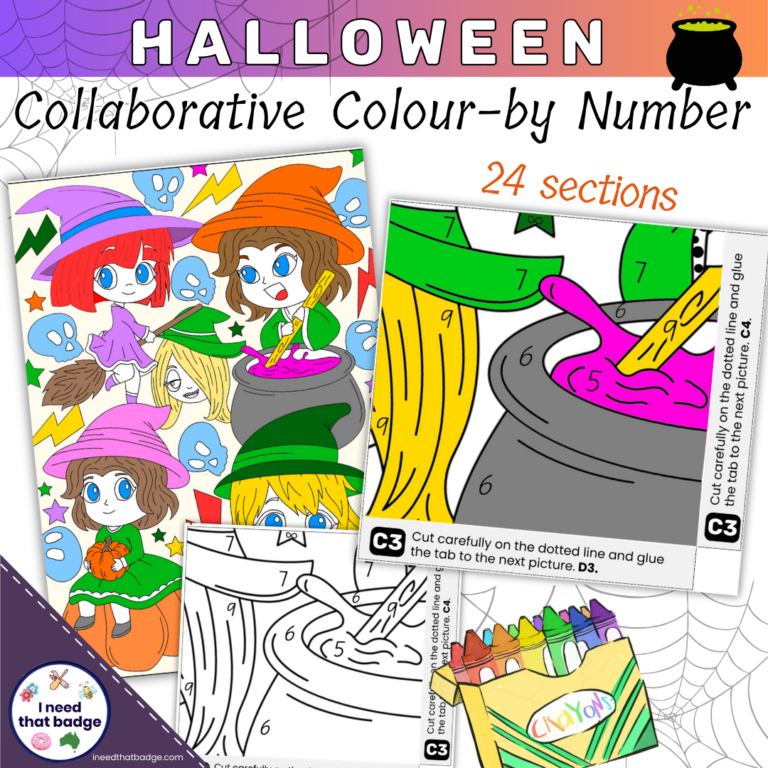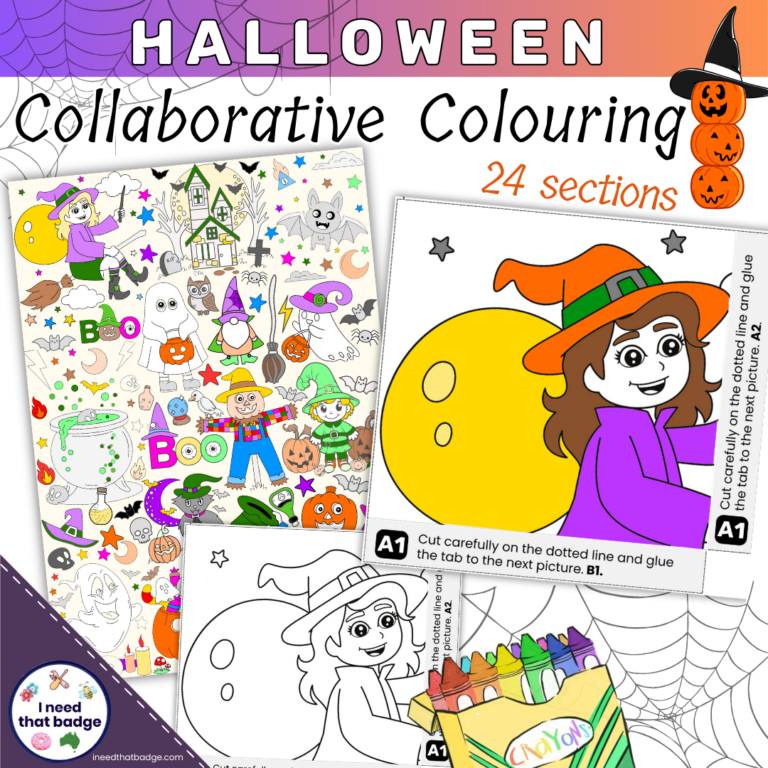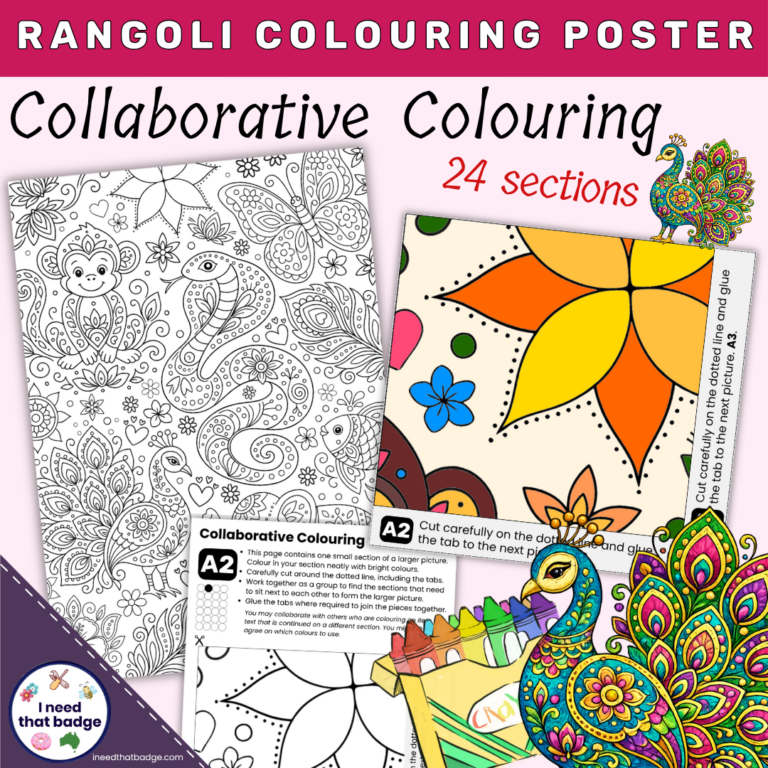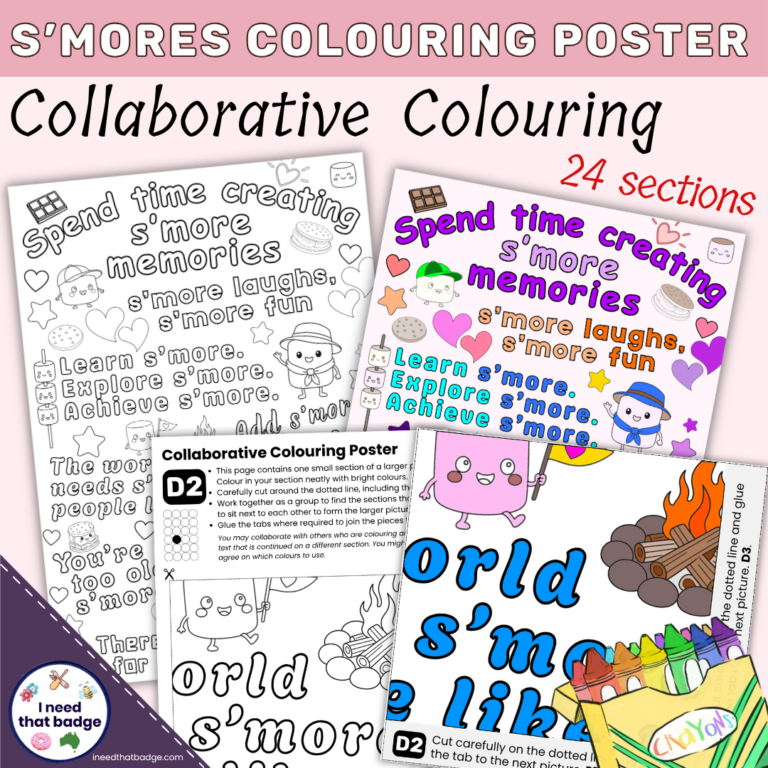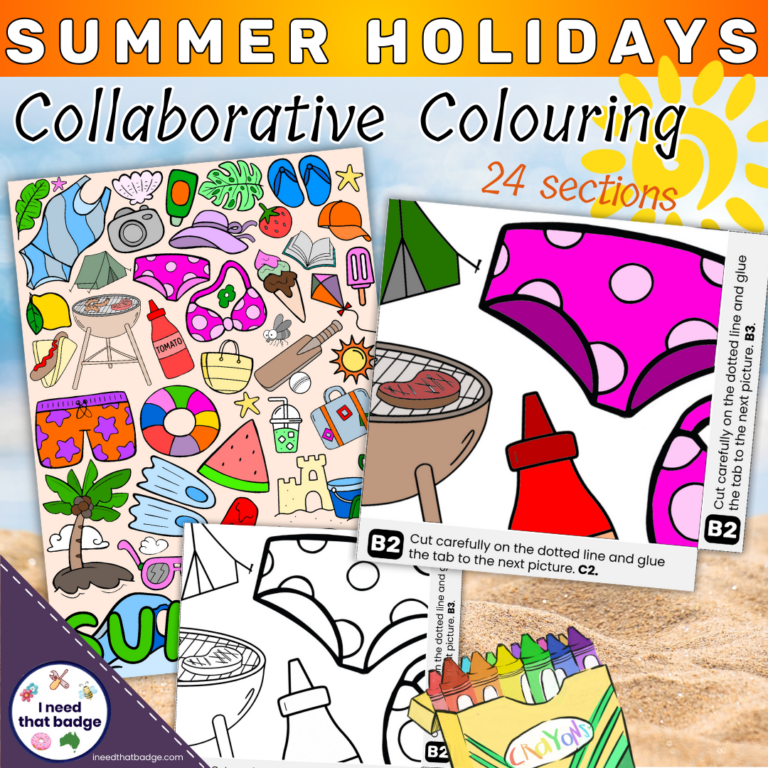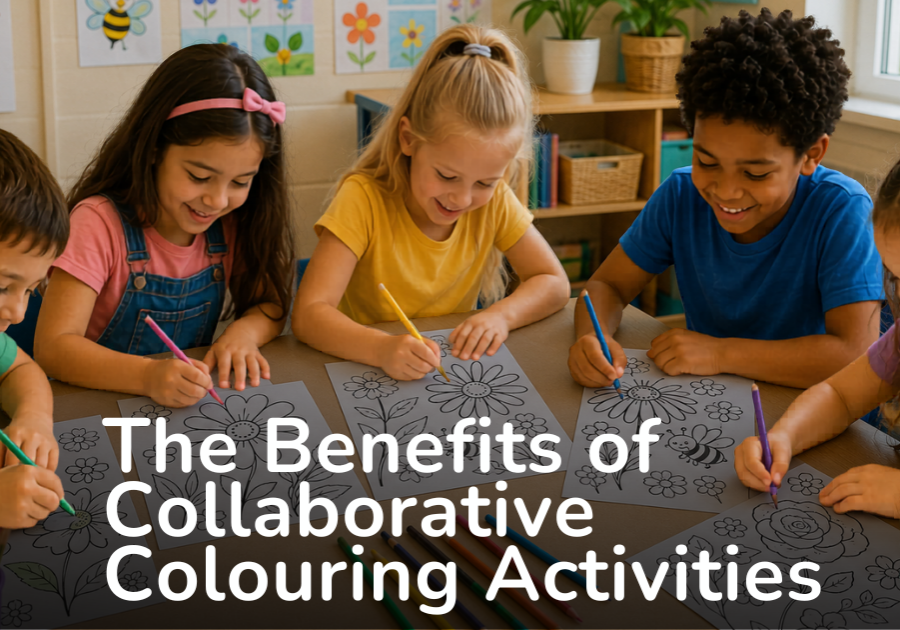

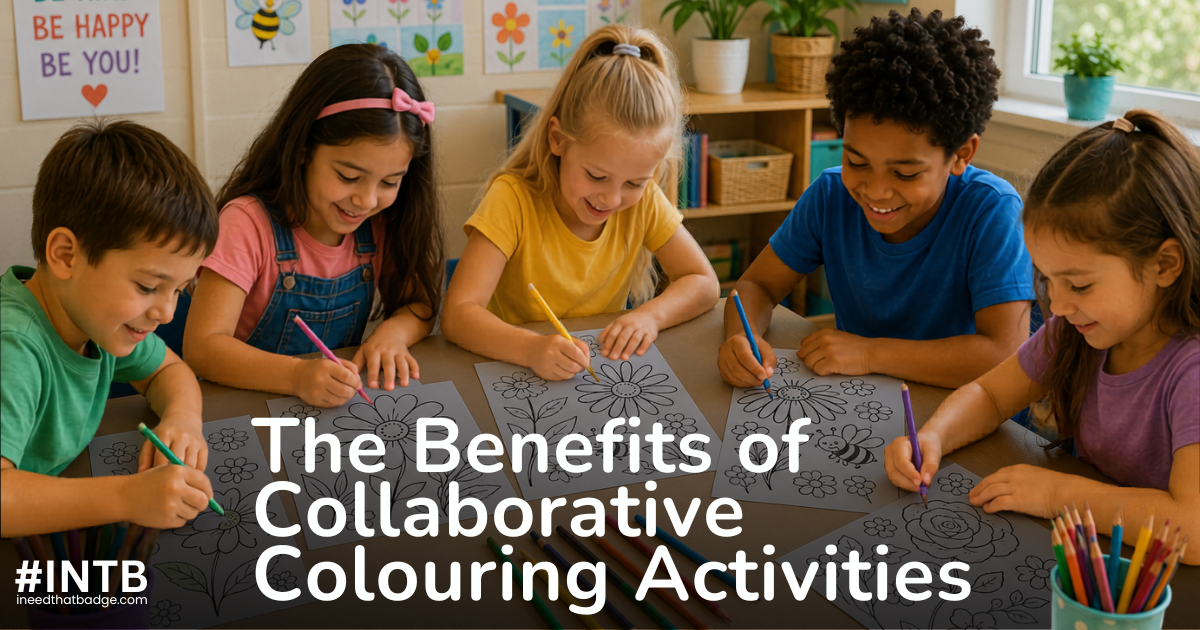
I absolutely love collaborative colouring activities and use them in both group settings and family activities. There is something wonderfully satisfying about watching individual pieces slowly come together to form one large shared artwork. I have used these activities with themed activities for youth groups, and even as take-home activities where participants are given one section to colour at home and return the following week. This creates a suspenseful group project, and also opportunities to encourage responsibility, participation, communication, and adaptability.
The Educational and Social Benefits of Collaborative Colouring Activities
Colouring activities have long been popular with children, but collaborative colouring takes the experience one step further by combining creativity with teamwork, communication, and shared achievement.
In a collaborative colouring activity, participants each complete one small section of a larger image. Once assembled, the individual pieces combine to create a large poster or artwork completed by the entire group.
These activities are simple to organise, enjoyable for a wide range of ages, and provide a surprising number of educational and social benefits.
1. Encouraging Teamwork and Cooperation
One of the greatest strengths of collaborative colouring is the way it encourages children to work together toward a shared goal.
Each participant contributes an important piece to the final artwork. While every page may look small on its own, the completed poster depends on everyone participating.
This helps children learn:
- cooperation
- communication
- patience
- responsibility
- group problem-solving
Participants often discuss colours, coordinate sections, help each other assemble the pages, and work together to create a cohesive final display.
2. Building a Sense of Inclusion
Collaborative activities can help create a strong sense of belonging.
Every participant contributes equally, regardless of artistic ability. Because each person colours only a section of the image, children who may feel less confident about drawing or art can still participate successfully.
This makes collaborative colouring especially valuable for:
- mixed-age groups
- classrooms
- youth organisations
- wellbeing activities
- community events
The final poster becomes something everyone helped create together.
3. Supporting Fine Motor Skills
Colouring activities help develop important fine motor skills and hand control.
Children practise:
- pencil grip
- colouring accuracy
- hand-eye coordination
- cutting skills
- spatial awareness
Collaborative posters that require cutting and assembling sections also encourage practical problem-solving and sequencing skills.
4. Encouraging Creativity
Although participants are contributing to a larger picture, each child still has opportunities for individual creativity.
Children can:
- choose colours
- experiment with shading
- add artistic flair
- discuss design ideas with others
This balance between personal creativity and group collaboration is one reason these activities work so well.
5. Reducing Stress and Supporting Wellbeing
Colouring is widely recognised as a calming activity.
The repetitive and focused nature of colouring can help children:
- relax
- improve concentration
- reduce anxiety
- regulate emotions
Collaborative colouring adds a social element that encourages positive interaction without requiring competitive behaviour.
For this reason, these activities are often used during:
- transition times
- wellbeing programs
- quiet sessions
- indoor activity days
- themed activity
6. Creating Meaningful Displays
One of the most rewarding parts of collaborative colouring is the final result.
Once assembled, the completed artwork creates an impressive display that reflects the effort of the entire group.
Large collaborative posters are perfect for:
- classroom walls
- hallways
- camps
- activity centres
- event displays
Children often feel proud seeing their individual contribution become part of something much larger.
7. Flexible Across Many Themes
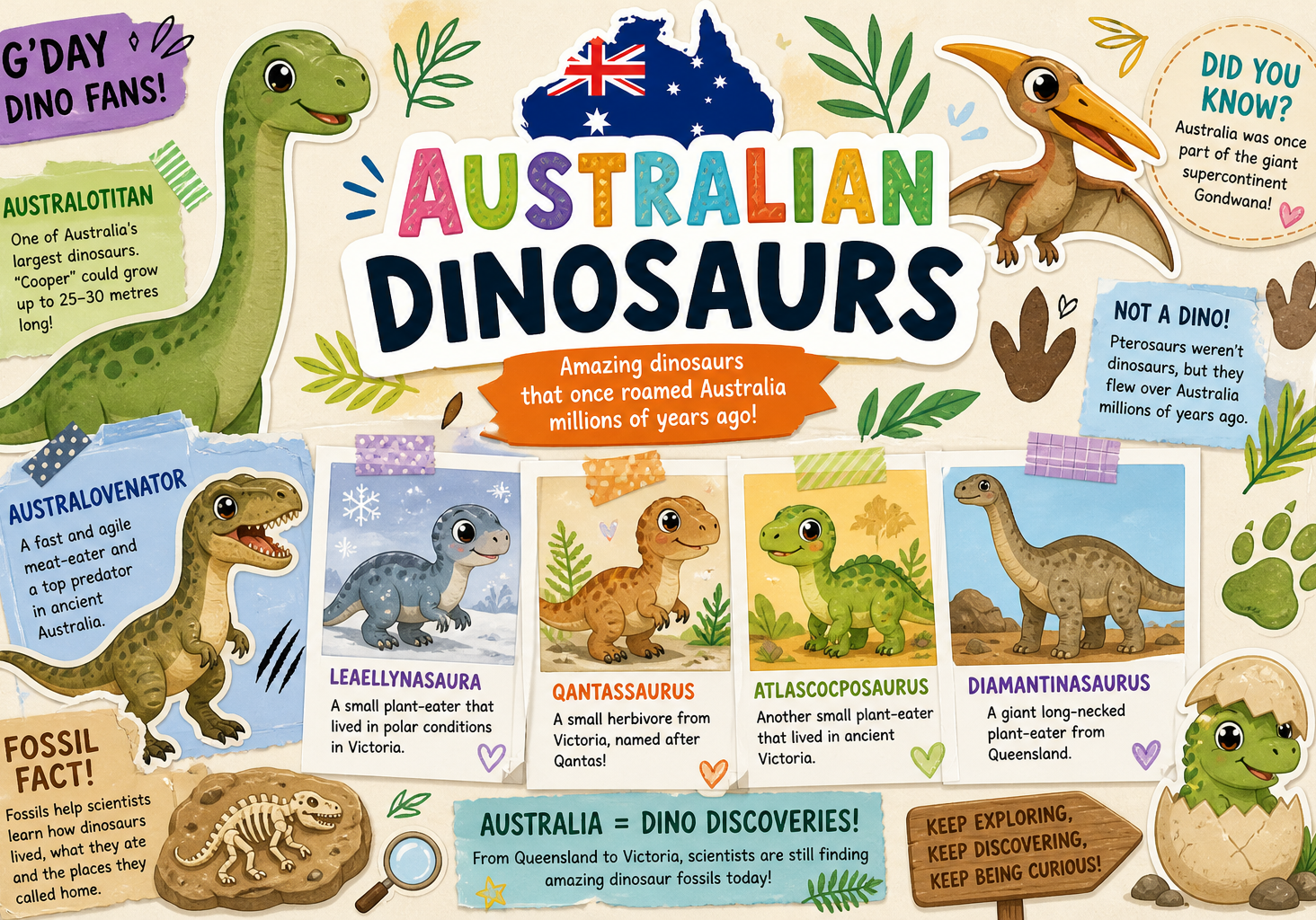
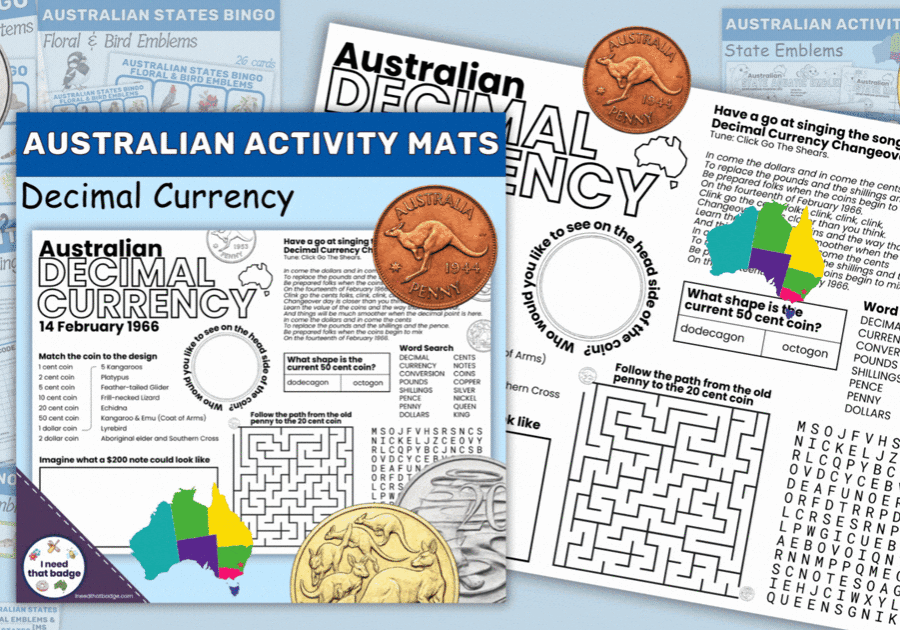
Collaborative colouring activities can be adapted to almost any topic, making them suitable for both educational learning and recreational activities.
Simple Activities with Big Benefits
Collaborative colouring activities may appear simple, but they provide valuable opportunities for creativity, communication, teamwork, and personal development.
They encourage children to work together, contribute individually, and celebrate a shared accomplishment — all while enjoying a fun and relaxing activity.
Sometimes the best learning experiences begin with something as simple as colouring a single page.